


 Customer Login

An office move is a good opportunity to take stock. Over time, workplaces tend to accumulate more than people realise: spare chairs in storage rooms, desks that no longer suit the way teams work, filing cabinets full of outdated material, and furniture that has quietly moved from one floor to another without being recorded.
An office furniture audit gives facilities and office managers a clear picture of what the business owns before relocation begins. More importantly, it helps you decide what is worth moving, what can be stored or refurbished, and what has reached the end of its useful life.
Done early enough, this can reduce unnecessary transport and replacement costs while giving the team planning the new workplace much better information to work with. It should therefore sit near the beginning of your wider office move checklist, rather than becoming another job to squeeze in during moving week.
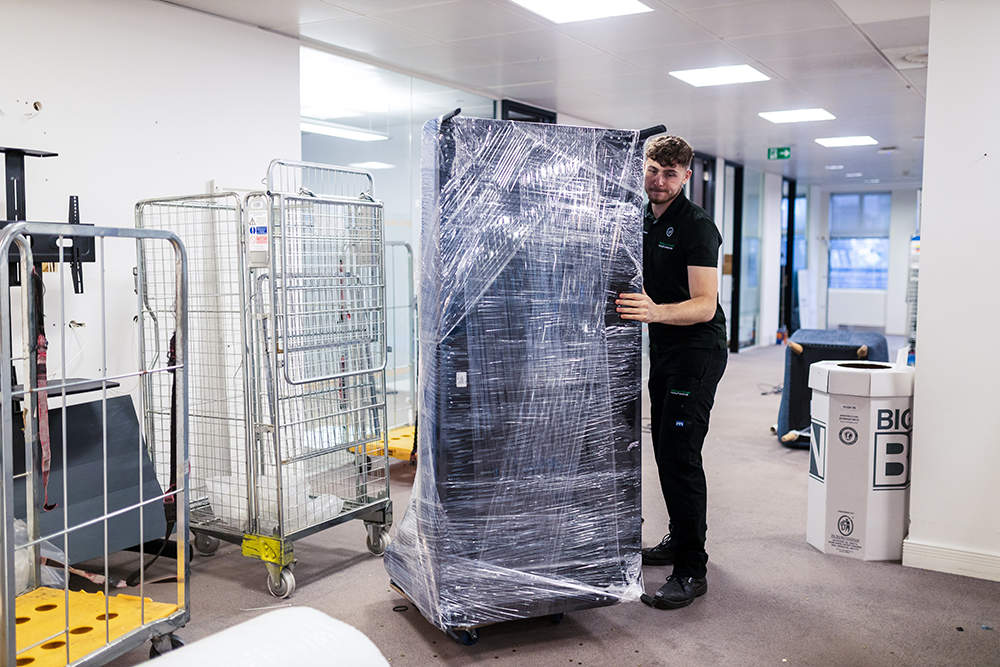
What Is an Office Furniture Audit?
A furniture audit is a structured assessment of the furniture and related assets across your workplace. It starts with establishing what you actually have. Desks, task chairs, meeting tables, storage units, reception furniture, and breakout seating might all be recorded, but simply counting them is only part of the job. A useful audit should also capture information such as:
- The location of each asset
- Its dimensions and specifications
- Its current condition
- How frequently is it used
- Whether it still meets the needs of employees
- Whether it can be dismantled and relocated
- Its potential for reuse or refurbishment
- Whether it should be stored, recycled, or replaced
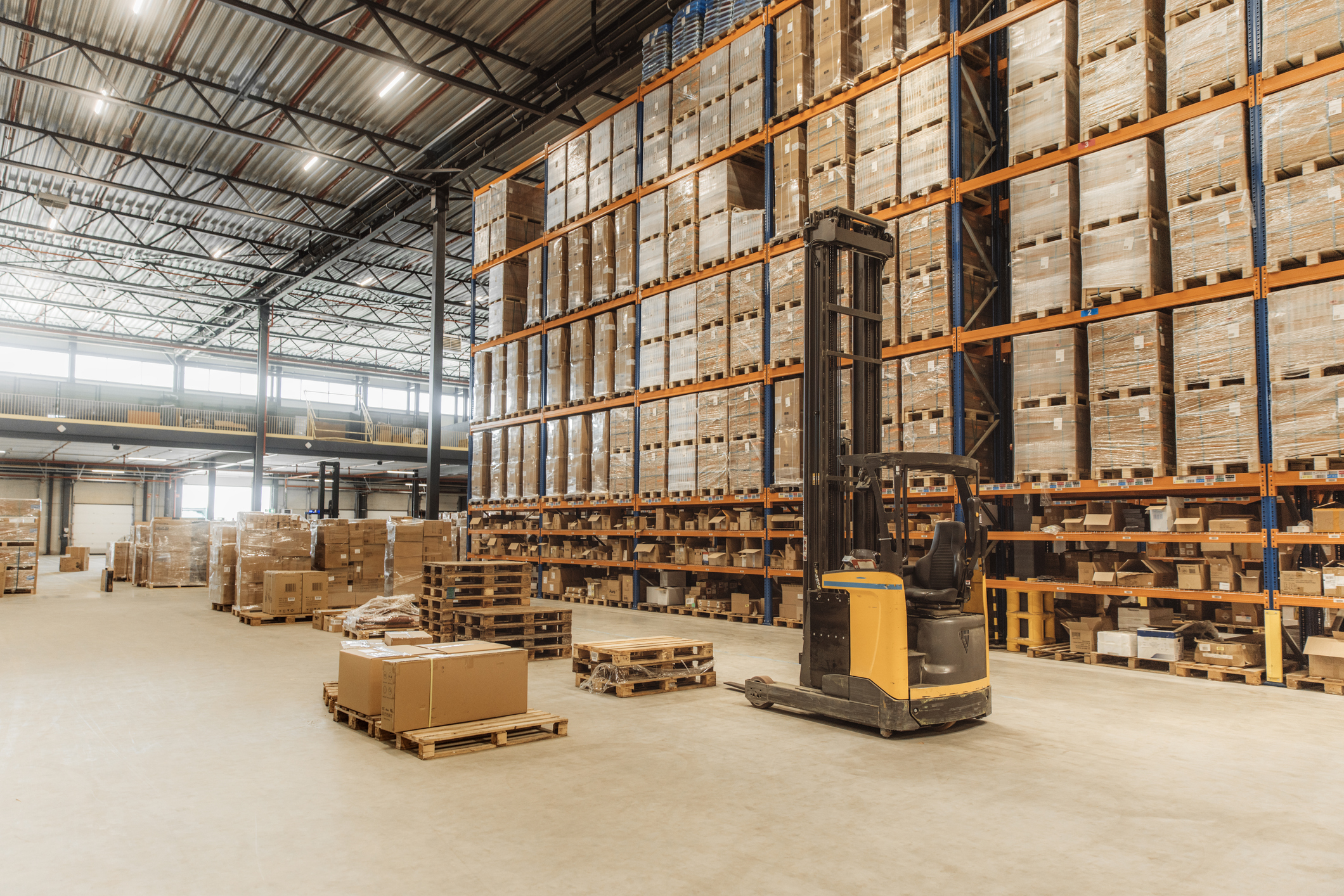
Photographs and asset tags can make the resulting record considerably more useful. Instead of relying on an old spreadsheet or somebody’s memory, facilities teams have a visual, traceable record that can be referred to throughout the relocation.
Our Workplace audit takes this approach further by capturing, tagging, and photographing workplace assets while recording factors such as condition, value, and utilisation. This creates a centralised record that can support the move itself as well as longer-term estate and asset management.
Why Conduct a Furniture Audit Before Relocating?
The simplest reason is that there is little value in paying to move something you do not need. Every unnecessary desk, cabinet, or chair takes up vehicle capacity, requires handling, and consumes space at the destination. If it is only going to be disposed of shortly after arriving, those costs could have been avoided by making the decision earlier.
An audit also helps prevent the opposite problem, replacing furniture unnecessarily. An organisation may assume that a new office requires an entirely new furniture package, only to discover that a significant proportion of its existing assets remain suitable.
Understanding what can be retained or refurbished gives project teams a firmer basis for budgeting. Investment can then be directed towards genuine gaps rather than replacing serviceable assets.
There is a space-planning benefit too. Knowing the dimensions, quantity, and condition of furniture makes it easier to test what will actually work in the new building. Harrow Green’s guide to office space planning explains why workplace planning needs to consider much more than headcount. Hybrid attendance, meeting-room demand, circulation, storage, and different working styles all affect what a workplace requires.
For example, moving 100 desks because you currently own 100 desks is not necessarily sensible if workplace data shows that only 65 are required at peak occupancy. The remaining floor area might be more valuable as meeting space, quiet working areas, or collaboration zones.
Finally, auditing supports more responsible asset management. Furniture that is no longer required does not automatically have to become waste. Depending on its condition, it may be suitable for internal redeployment, refurbishment, resale, donation, or recycling.
Your Office Furniture Audit Checklist
For facilities managers, the easiest way to approach the process is systematically rather than attempting to assess an entire building at once. Use the following office furniture checklist as a practical starting point.

Define the scope
Decide which buildings, floors, and asset categories will be included. Assign responsibility for gathering the information and agree on how it will be recorded.

Work through the workplace zone by zone
Move systematically through workstations, meeting rooms, breakout areas, reception spaces, storage areas, and communal facilities. This reduces the chance of overlooked assets.

Record and photograph each asset
Capture the item type, quantity, location, dimensions, and any identifying information. Photographs are particularly useful where similar assets have different conditions or specifications.

Assess furniture condition
Use a simple, consistent rating system. For example, assets might be classified as good, serviceable but requiring repair, suitable for refurbishment, or beyond economical use. Review utilisation: Ask whether the asset is genuinely needed. A perfectly good bank of filing cabinets still represents wasted space if the organisation has largely moved to digital records.
Review utilisation
Ask whether the asset is genuinely needed. A perfectly good bank of filing cabinets still represents wasted space if the organisation has largely moved to digital records.

Check suitability for the new workplace
Compare existing assets with proposed layouts and working practices. Consider dimensions, ergonomics, accessibility, team requirements, and how furniture will interact with circulation routes.

Decide what to move, store, recycle, or replace
Give every asset a clear destination. Items required immediately can be included in the relocation plan, while assets that may be needed later can be placed into secure storage. Suitable furniture can be refurbished or redeployed, while unwanted items should be considered for resale, donation, or responsible recycling before disposal is treated as the default.

Identify purchasing gaps
Only once existing assets have been assessed should you determine what needs to be bought. This makes procurement more accurate and helps prevent unnecessary spending.

Connect the results to the wider move
Share the final asset information with the people responsible for workplace planning, budgeting, and relocation logistics. Furniture is only one part of the project. IT equipment, for example, requires its own inventory, security, and continuity planning, as covered in Harrow Green's IT office move guide.
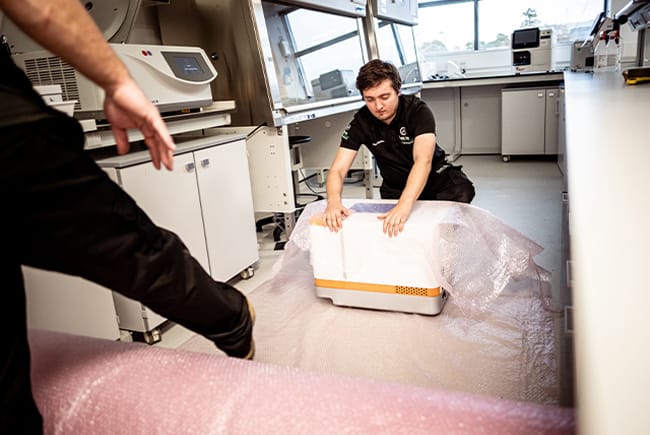
Why Conduct a Furniture Audit Before Relocating?
Any kind of business success is, of course, great for your bottom line. But if you want to continue to be successful and take on larger projects, you may need to move to larger premises with better equipment to make your growth and expansion plans possible.
The success of modern teams is often attributed to innovative workspace design: collaboration areas and breakout zones, dedicated spaces to deep focus, and tech-enabled meeting spaces.
However, many new and small businesses don’t have the upfront capital available for their own purpose-built facilities. Therefore, relocating to a new space that already supports these ways of working is often more cost-effective than completely redesigning an outdated space.
How Harrow Green Supports Office Furniture Audits and Relocations
A workplace audit becomes much more useful when the information collected feeds directly into relocation planning. Harrow Green’s workplace audit service creates a living digital record of workplace assets. On-site teams can capture, tag, and photograph items while recording information about their condition, value, and utilisation. Bespoke capture methods can also be developed for more specialist assets, including IT equipment, laboratory equipment, and modular items.
That visibility gives organisations a stronger basis for deciding what they already own and what should happen to it next. It can reveal underused resources, reduce unnecessary purchases, and identify opportunities for internal redeployment.
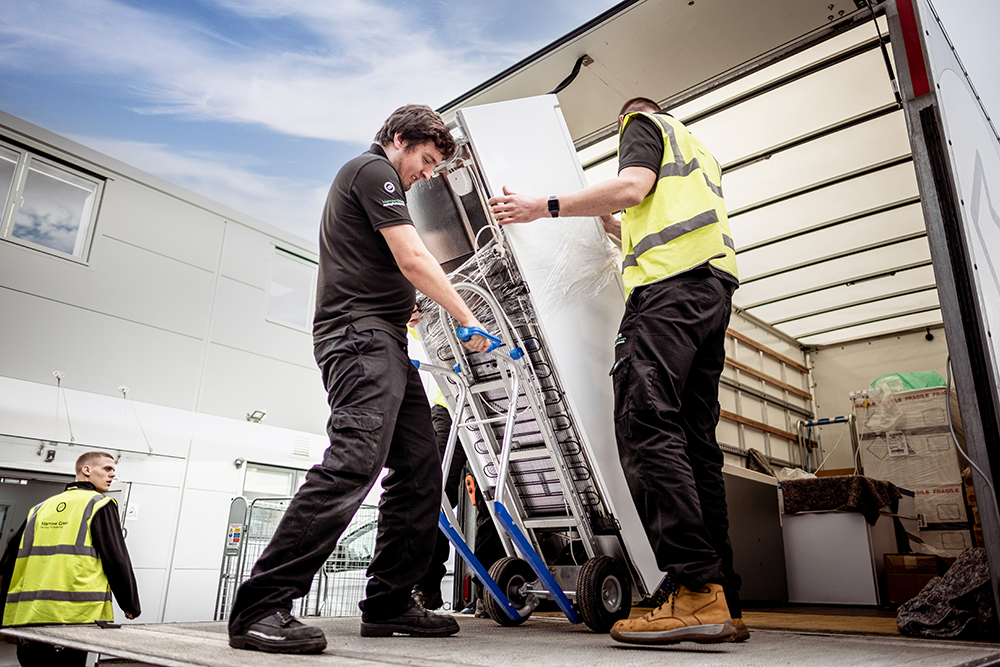
The information can then support space planning and relocation logistics. Assets being retained can be mapped into the new workplace, surplus items can be directed towards storage or other routes, and removal teams have a much clearer understanding of what actually needs to travel.
This joined-up approach is particularly valuable during larger office moves, where furniture decisions need to sit alongside IT relocation, employee communication, contractor management, and business continuity planning. Rather than moving everything and sorting it out afterwards, the aim is to arrive at the new workplace with the right assets already identified.
Start Your Office Move With Better Information
The best time to decide whether a desk, chair, or cabinet belongs in your new workplace is before it reaches the removal vehicle. A structured audit gives facilities and office managers the evidence needed to make those decisions confidently. It can reduce unnecessary moving and purchasing costs, identify opportunities for reuse and refurbishment, improve space planning, and make the relocation itself easier to manage.
For organisations preparing to relocate, Harrow Green can connect workplace assessment with project management, space planning, storage, and the practical delivery of the move.
Contact Harrow Green to discuss your workplace requirements and start planning your relocation with a clearer picture of the assets you already have.