


 Customer Login

An evidence-based view from the front line of workplace change
For the last few years, the “future of the office” has been treated as a prediction game. One week the headlines declare the office dead. The next, we’re told every workplace will become a social club, innovation hub, or cultural theatre.
From where we sit at Harrow Green, working day-in, day-out with organisations that are relocating, reconfiguring, downsizing, expanding, and rethinking their estates, the reality is far less dramatic, and a lot more useful.
The future of the office isn’t being decided by trends. It’s being shaped by evidence, constraint, behaviour, and what actually works operationally.
This article sets out an evidence-based view, drawn not just from surveys and sentiment, but from thousands of live workplace change programmes across corporate, public sector, education, healthcare, and specialist environments. It’s about what organisations do, not just what they say they want to do.

The office isn’t disappearing – but its job is changing
Despite the persistent ‘offices are obsolete’ narrative, real estate decisions and capital investment tell a different story. Organisations are still investing in offices, just with much more intent.
What we’re consistently seeing isn’t abandonment. It’s a tightening of purpose.
The office is no longer expected to be everything for everyone, five days a week. Increasingly, it’s designed around a smaller set of outcomes that are hard to replicate remotely:
- Collaboration that genuinely benefits from being together
- Structured learning, mentoring, and onboarding
- Culture-building and leadership visibility
- Complex, confidential, or regulated work
- Access to specialist infrastructure or equipment
- Environments where neurodiversity can thrive.
That narrowing of purpose changes everything: size, layout, ratios, amenities, and operating model. Space that used to exist by default now has to earn its keep.
In practical terms, the future office is less about presence and more about performance.
Hybrid has stabilised – but it hasn’t standardised
Hybrid working has moved from experimentation to normalised reality. But ‘normalised’ doesn’t mean ‘consistent’.
Utilisation studies, access data, and what we see through relocation programmes show a broad convergence, typically two to three anchor days per week, alongside major differences in how organisations make hybrid actually function.
The organisations making the most progress aren’t the ones trying to enforce perfect attendance models. They’re the ones designing for predictability over control. In other words: offices that work well at partial occupancy, rather than trying to recreate pre-pandemic density with fewer people.
That shows up in very practical ways:
- Desk numbers are increasingly based on observed utilisation, not policy assumptions
- Collaboration space is sized around peak demand, not average days
- Storage, lockers, and support space are being rebalanced
- Moves are planned around phased occupancy, not “day one” saturation
- More organisations are building social and environmental impact into the process through reuse and furniture donations.
The direction of travel is clear: the future of the office won’t be dictated by universal mandates. It will be shaped by organisational rhythms, when teams need to be together, and why.
Space reduction is real – but it’s not a straight-line cut
Most organisations we work with are reducing overall footprint. That’s simply true.
What’s often misunderstood is how those reductions happen. It’s rarely a neat percentage cut across every building. More commonly, it’s delivered through a mix of:
- Consolidating multiple locations
- Exiting low-quality or poorly connected space
- Rebalancing space types within retained buildings
- Improving utilisation of what’s already there.
And here’s the important part: many organisations reduce total area while investing more per square metre in the space they keep. Fewer offices now have to do more, and do it better.
From a relocation and change perspective, that creates complexity. Smaller footprints mean tighter tolerances, less redundancy, and a bigger dependency on accurate data and realistic assumptions.
Moves don’t fail because organisations shrink. They fail when organisations shrink without aligning space, behaviour, and operations.
So the future office isn’t just smaller, it’s more precisely calibrated.

Data is replacing assumption – slowly, but it’s happening
One of the most positive shifts we see is the steady move toward evidence-led workplace decisions.
Occupancy sensors, access/badge data, booking systems, and qualitative engagement are increasingly shaping space planning and relocation strategies. The data is rarely perfect, but it changes the conversation.
Decisions that used to be driven by senior preference or legacy standards are now being tested against real behaviour, such as:
- Meeting rooms that sit empty most of the week
- Collaboration areas that are over- or under-specified
- Teams whose presence patterns don’t match the policy on paper
- Storage and archive space that no longer reflects digital reality.
That said, data isn’t a magic answer, it’s input. The organisations that struggle are often the ones that treat workplace data as a verdict, rather than evidence that needs interpreting.
The future of the office depends on combining data with professional judgement, operational insight, and proper change management.
Change management isn’t a 'nice to have' anymore
One of the clearest lessons from recent years: workplace change fails when it’s treated as a property project instead of an organisational one.
Post-move reviews consistently show dissatisfaction is rarely just about the design. It’s usually about:
- Unclear expectations about how the space should be used
- Weak communication before and during the move
- Lack of leadership alignment
- Behavioural change that isn’t properly supported
As offices become more intentional – and less forgiving – the margin for error shrinks. A poorly managed move into a hybrid-optimised office can damage trust, productivity, and culture, regardless of how good the fit-out looks.
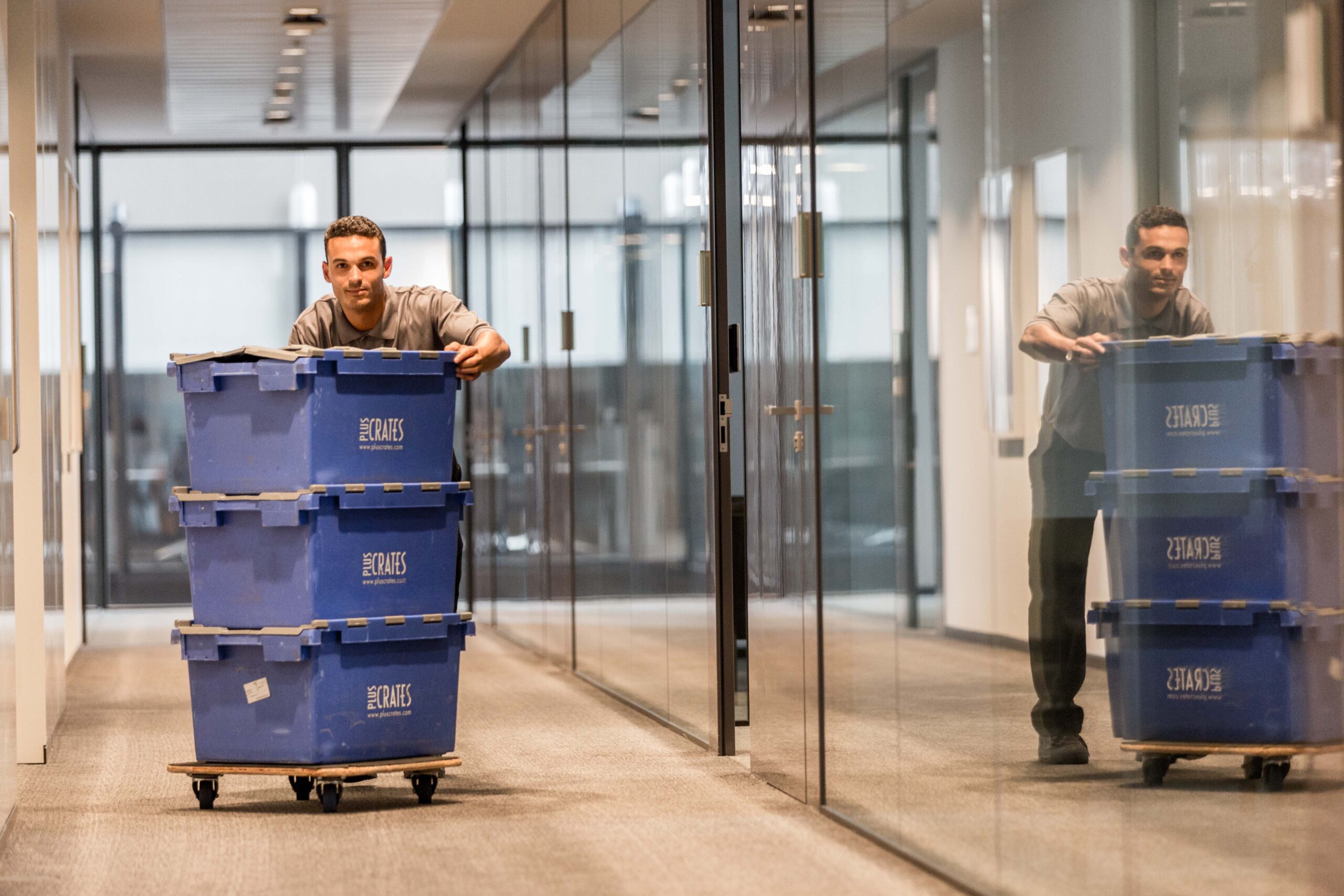
This is why successful workplaces now require structured change programmes: communication, engagement, training, and post-move support are core delivery components, not optional extras.
The office as infrastructure, not incentive
There’s been a noticeable shift away from treating the office as a ‘pull factor’ or a perk.
Early post-pandemic narratives leaned heavily on hospitality-led design, amenities, and experiences to entice people back. Those elements can still help, but the evidence suggests they’re not decisive on their own.
What matters more is whether the office enables people to do their jobs well.
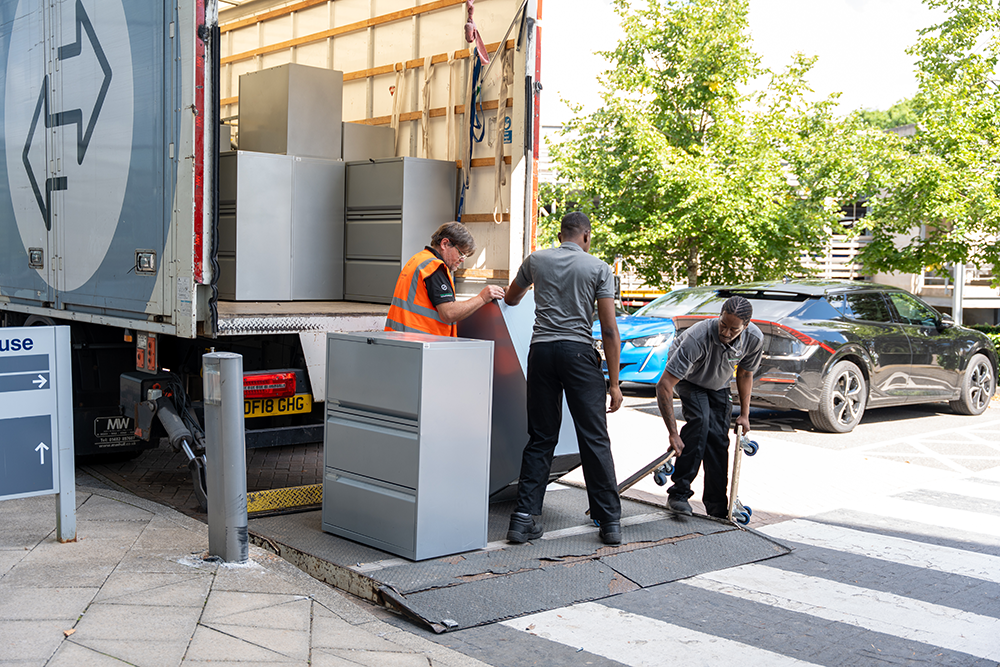
More organisations are treating the office as critical infrastructure, something that must work reliably, efficiently, and safely, rather than as a reward. That’s especially true in regulated environments, public sector estates, and specialist workplaces.
In this context, success is measured less by buzz and more by outcomes: productivity, collaboration quality, onboarding effectiveness, and operational resilience.
Different sectors, different futures
One of the biggest problems with ‘future of the office’ commentary is the assumption that there’s a single path.
In reality, sector differences are widening, not narrowing.
- Corporate offices tend to optimise for collaboration, flexibility, and leadership visibility
- Public sector estates are balancing cost pressure, accessibility, and service delivery
- Education is integrating admin space with hybrid teaching, research, and student experience
- Healthcare and laboratories require physical presence, compliance, and specialist infrastructure.
In laboratory and scientific environments in particular, a fully remote future was never realistic. The focus is on protecting critical processes, minimising disruption, and maintaining continuity through change.
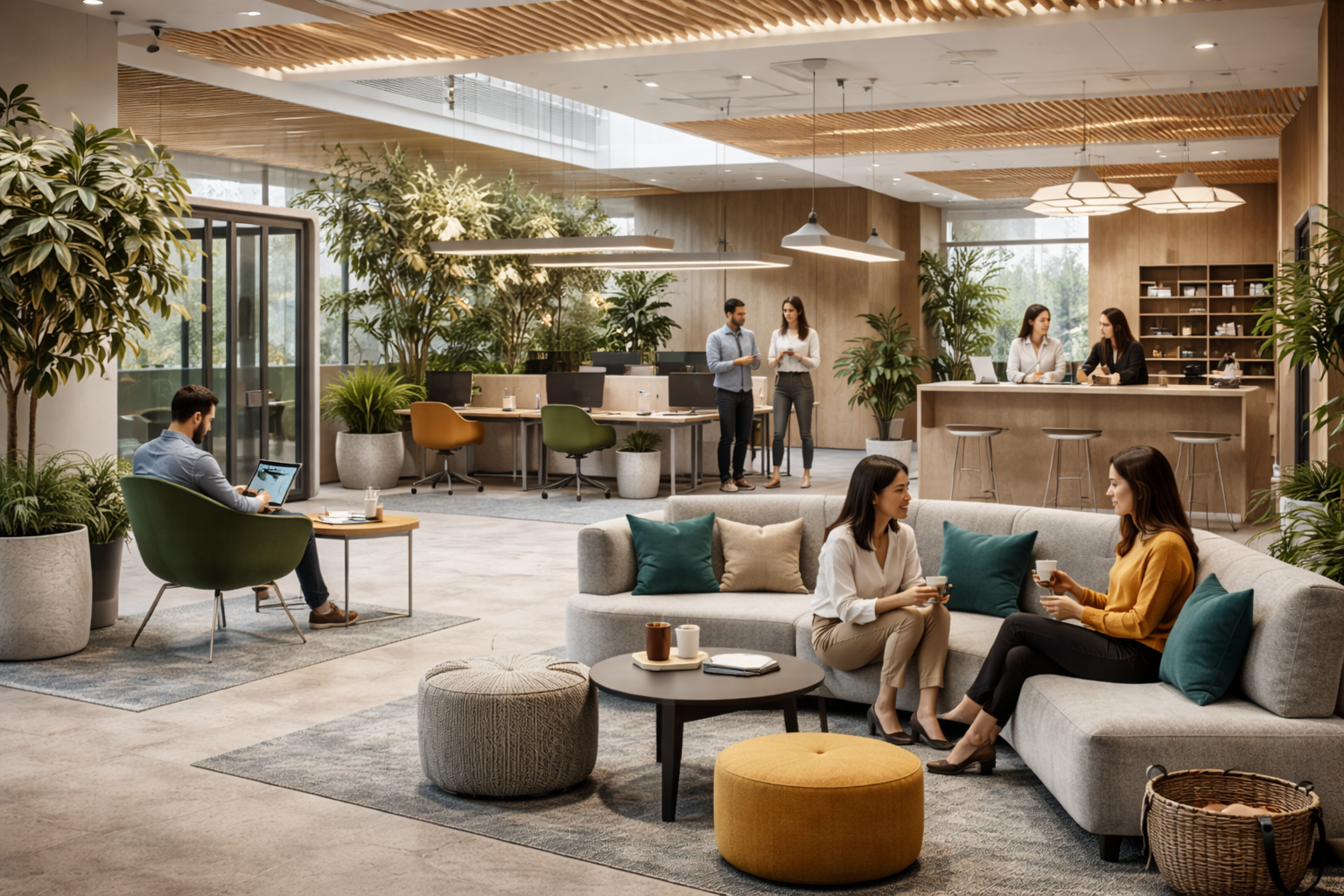
So the future office isn’t one future, it’s many, shaped by operational reality more than aspiration.

Sustainability is becoming structural, not symbolic
Sustainability has moved beyond statements and targets into the mechanics of workplace change.
We increasingly see it influencing decisions such as:
- Retaining and repurposing existing furniture
- Designing for adaptability rather than perfection
- Reducing churn through longer-life layouts
- Minimising waste during relocations and decommissioning
Importantly, sustainability is aligning with cost and resilience. More organisations are recognising that the most sustainable workplace is often the one that doesn’t need to be ripped out and rebuilt every few years.
The future office will be less about headline-grabbing features and more about durable, adaptable, responsible design and delivery, with real meaning and purpose.
Planned more often – changed less drastically
A paradox is emerging: organisations are reviewing their workplaces more frequently, but they’re becoming more cautious about radical transformation.
Shorter lease cycles, flexible arrangements, and ongoing uncertainty are driving incremental change rather than wholesale reinvention. Offices are being designed to evolve, not to represent a single fixed vision.
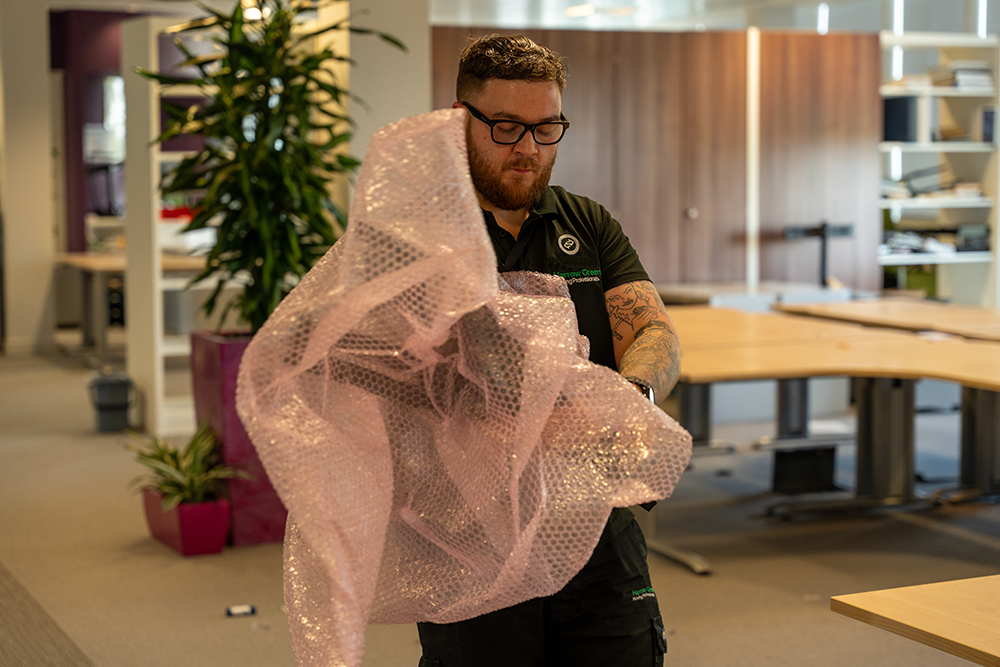
That has practical implications for relocations and change delivery. Flexibility has to be built in from the outset, into infrastructure, furniture, technology, and operating models.
The future office isn’t a finished product. It’s a platform for change.
Conclusion: a more honest future for the office
The future of the office is less dramatic than the predictions, but more demanding.
It requires organisations to be honest about how work actually happens, disciplined in the use of space, and realistic about the human impact of change. It demands evidence over fashion, behaviour over aspiration.
From Harrow Green’s perspective, working at the intersection of workplace strategy, change management, and complex relocation, the message is simple:
The office still matters. But it must now earn its place.
The organisations that succeed won’t be the ones chasing trends. They’ll be the ones grounding decisions in evidence, aligning space with purpose, and supporting people through change.
Not novelty – but clarity, resilience, and intent.